At Civilytics, we've seen firsthand the higher burden advocates face when seeking to use data to advocate for change. That's why we were excited to partner with Tableau on creating a 5-step guide (opens in new tab) to #defendyourdata.
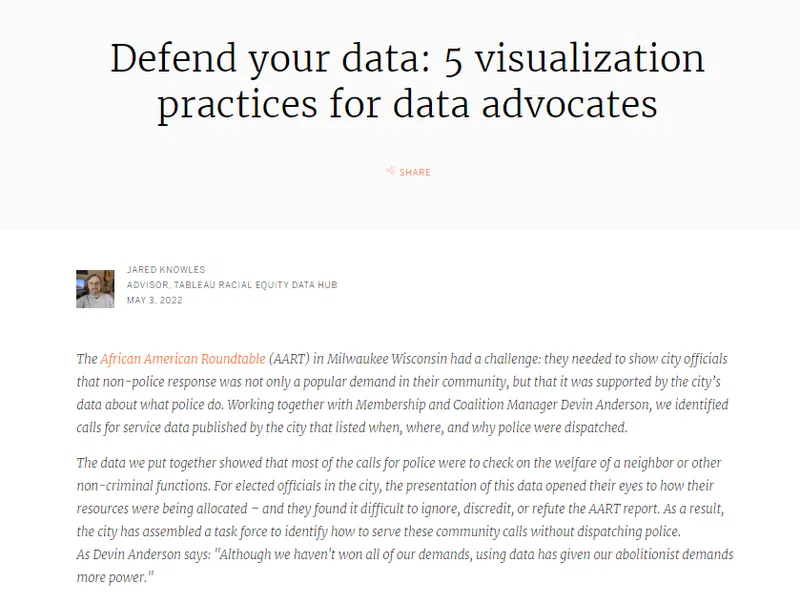
This guide, created through Civilytics' work (opens in new tab) for the Tableau Racial Equity Data Hub (opens in new tab), describes 5 steps to defend your data analysis from the most common threats to credibility. These steps are:
- Choose the best data and use it to establish your credibility
- Prepare the data with care
- Build trust through transparency
- Frame your analysis
- Anticipate and address the audience’s questions
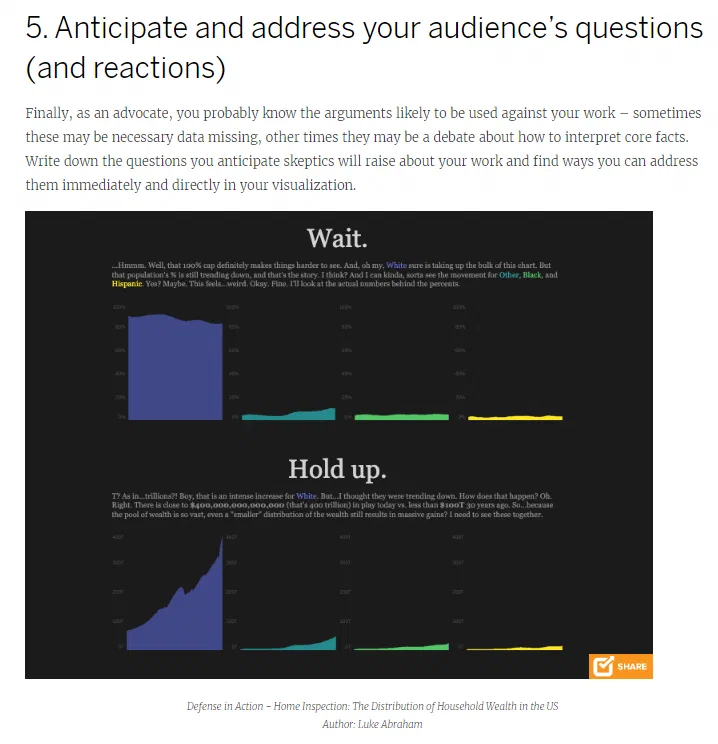
For each step, the guide includes an example of a recent visualization showing the step in action. For instance, here's Step 5: Anticipate and address the audience's questions.
The guide was inspired by Lee Staples’ Roots to Power: A Manual for Grassroots Organizing (opens in new tab), originally published in 1984. Staples identifies 7 strategies that are used to resist change:
- Deflecting
- Delaying
- Deceiving
- Dividing
- Denying
- Discrediting
- Destroying
Staples wrote that to succeed in your campaign for change:
[Your organization]… can take a number of steps to overcome efforts to discredit its campaigns. Obviously, its facts and figures should be accurate. Challenges can be expected, especially when the information is damning. The best defense will rest on solid research methodology and a good media strategy to carry your message to the general public.
The guide's five steps provide strategies to defend your data, analysis decisions, and conclusions and carry your message forward to change the status quo. We've used these steps for the dashboards we created on prison gerrymandering and arrests in schools, dashboards created in partnership with Lovelytics (opens in new tab) for the Tableau Equity Hub.
Check out the guide here: https://www.tableau.com/about/blog/how-to-defend-your-data-for-data-advocates (opens in new tab)!